What to Price Into a 1970s Wonderland Hills House Before You Offer
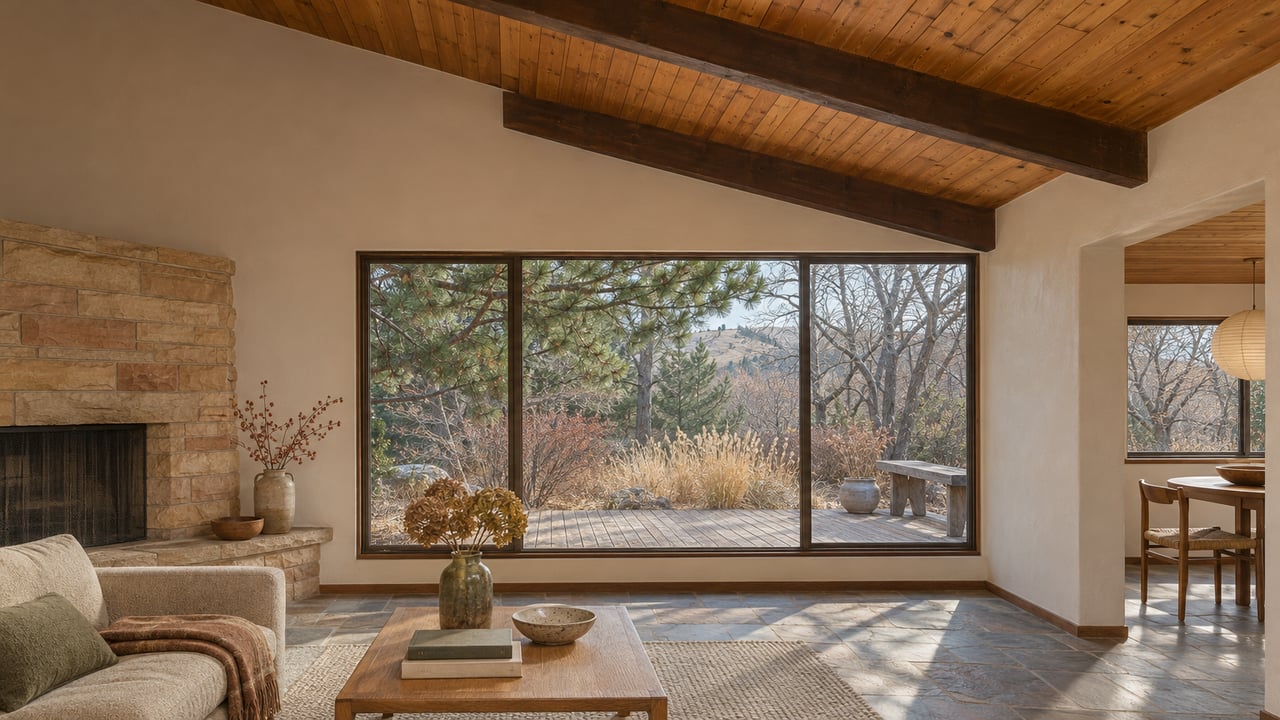
The 1979 Wonderland Hills house that local design-build firm SoBo Homes later remodeled was called the "House of the Future" when it went up. It had an insulated-concrete-form foundation and a four-season hot tub room with full-height south-facing glass for passive solar heat. By the time SoBo got to it, the kitchen was tiny and closed off from the rest of the house, and there was no bedroom above ground at all because the primary suite was in the basement. The upper loft office got so hot that it was unusable for part of every year. The passive solar glass had fogged, and the hot tub was broken. In SoBo's words, the house was "grossly outdated for what people want in a home today."
That house was not dated because of its countertops. It was dated because of where its rooms were. That difference is what matters when you price a Wonderland Lake home this fall, because the market is currently giving buyers money back at closing. That money is enough for finishes but nowhere near enough for floor plans.
Wonderland Hills was ambitious from the start. DTJ Design's history of the firm names partners Bruce Downing and Jim Leach as the people behind Wonderland Hills, which PLAN Boulder named Boulder County's Best New Subdivision in 1968. In a 2019 essay for the Daily Camera, Leach wrote that his Wonderland Hill Development Company bought the lake in the early 1970s as part of a 240-acre parcel. The plan was a planned residential development with "a variety of housing types in clusters," shared open space and a village center. It also included a marina on the lake.
The marina never got built. The state condemned the dam, and Leach sold about 100 acres west and north of the lake to the city at roughly $3,000 an acre. He donated the 23-acre lake itself in exchange for the city taking on the dam repair. The clustered housing did get built. The result is a 1970s neighborhood of one-off houses, homes that share driveways, and townhome complexes that rarely come up for sale. Many of the homes have big lots and long views, especially west of Broadway. One of them is Charles Haertling's 1971 Brenton House, the mushroom-shaped house that appears in Woody Allen's "Sleeper."
This history explains the houses. Wonderland Hills was built by people trying new things with site plans, solar gain and room arrangements. Some of those ideas have aged well, like the open space, the mature trees and the views. Others have aged into the kinds of problems remodelers get called to fix.
Three Boulder firms have published Wonderland Hills projects. Each one was a different house, and each project spent most of its money on the same thing.
SoBo Homes took on the 1979 "House of the Future." It moved the primary suite upstairs by expanding the loft out over the garage, then gave that suite its own ducted mini-split so the space could be heated and cooled separately from the original furnace. Then it built the main floor out over the double-height hot tub room, which gave the house a larger living, dining and kitchen area upstairs and a rec room below.
CREATE remodeled and added onto a 1970s custom home it describes as part of "the Wonderland Hills planned community." The stated goal was "to rescue a badly outdated home." The work removed interior partition walls to make one great room for the kitchen, dining and living spaces. It also added an upper-level primary suite and new decks. That project was finished in 1995.
Booker Built opened up another 1970s Wonderland Hills home. It combined the sunroom, kitchen and living room into one space, and it raised the sunroom, which had sat half a level down, to the same level as the rest of the main floor. The team also remodeled the kitchen and baths and added decks. The firm notes that the work "had to work within strict HOA guidelines."
All three projects began by reworking the floor plan: they opened up a closed kitchen, pulled a sunroom or solar room into the main living space, or added a primary suite on an upper floor. Finishes came after that. Three houses are a small sample in a neighborhood this varied. Still, three firms writing up the same repair on three different Wonderland Hills houses gives a buyer a fair idea of what to look for on a first walk-through.
Here is where the market comes in. On paper, Boulder County looks steady. In the Colorado Association of REALTORS report for October 2026, the countywide median sale price for single-family homes was $835,000, up 1.2% from October 2025. Homes took a median 65 days to sell and closed at 97.8% of list price. The same report notes that its sale-to-list figure does not count seller concessions.
Concessions are where this fall's market is actually moving. In CAR's October market commentary, published November 12, the association's Boulder and Broomfield spokesperson said about 52% of transactions in the two counties involve seller concessions averaging 5% of the purchase price, often used to buy down a buyer's mortgage rate. The commentary also notes that days on market are counted from the most recent list price, so homes that went through price cuts have been for sale longer than the figure shows.
The city-level numbers look much worse. BizWest reported that the City of Boulder's median single-family sale price for September 2026 was $1,265,000, down 21.4% from September 2025. That median comes from only 41 sales in one month, with 174 active listings. With so few sales, a month with fewer expensive homes closing can pull the median down by itself. So the 21% drop says more about which houses sold in September than about what any single Wonderland Lake house is worth. The roughly 5% concession is the steadier number. It shows up in more than half of all deals, and it tells you how much sellers are actually willing to give back.
Run the 5% figure through what remodeling costs in Boulder. On a house at the city's September median of $1,265,000, a 5% concession comes to about $63,000. In its kitchen remodeling guide, published in July 2026, SoBo Homes lists Boulder planning figures of $150,000 and up for a cosmetic kitchen refresh with no wall removal and no plumbing or appliance moves. A full layout reconfiguration starts at $200,000, and an addition or relocation starts at $300,000. SoBo's additions page, published in October 2026, puts a ground-level primary suite addition at $400,000 to $550,000.
A typical concession covers less than half of the least expensive kitchen tier on that list. A concession spent on a rate buydown also isn't available for construction at all. In Wonderland Hills, the work these houses keep needing is a reconfigured layout or an upper-level primary suite, and that falls in the $200,000-and-up tiers. A closing credit is a reasonable way to handle worn carpet or an old water heater. It does nothing for a house whose kitchen, sunroom and bedrooms are in the wrong places. That gap has to show up in the price you offer.
Design matters as much as the budget. Booker Built's Wonderland Hills project had to fit within the community's HOA guidelines, so in the clustered sections a buyer is pricing more than a contractor's estimate. The question is what the house can realistically become.
This is general market and cost information, not legal, tax or financial advice. Confirm the numbers for your own purchase with your lender and the right professionals.
On a first walk-through, look past the surfaces and sort the house by which kind of problem it has. Paint, flooring and fixtures can be handled with a credit. A kitchen that's walled off, a sunroom set half a level down, a primary suite in the basement, or a loft that overheats in summer are the conditions that started the SoBo, CREATE and Booker Built projects. Each one puts the house in a higher cost tier. A house can be well kept and still have every one of those layout problems. A house with dated finishes on a plan that already works can be the better buy at a higher price.
When sellers are giving back about 5% on more than half of all deals, a buyer has room to negotiate. That room is worth more if the price itself reflects the layout work than if it turns into a closing credit that covers less than half of a cosmetic kitchen refresh. You can see current inventory on the Wonderland Lake homes for sale page, and the Wonderland Lake neighborhood guide covers the trails, lake and open space that Leach's land deal preserved.
Are all Wonderland Hills homes built the same way? No. The neighborhood was developed in the 1970s with one-off custom homes, shared-driveway clusters and townhome complexes, so floor plans vary from house to house. The layout pattern in this post comes from three documented remodels, not from every house in the neighborhood.
Does Boulder's falling city median mean Wonderland Lake prices dropped 21%? That 21.4% decline was a citywide September median based on 41 sales. A sample that small moves a lot depending on which homes happen to sell, so it isn't a reliable measure of value for any single street.
If you're looking at a 1970s Wonderland Hills house and want to know whether you'd be paying for a refresh or a reconfiguration, walk it with John Canova, a Boulder advisor whose background includes hands-on building and remodeling. Work With John.


Team up with John to ensure your next Boulder Real Estate Transaction is a Success.