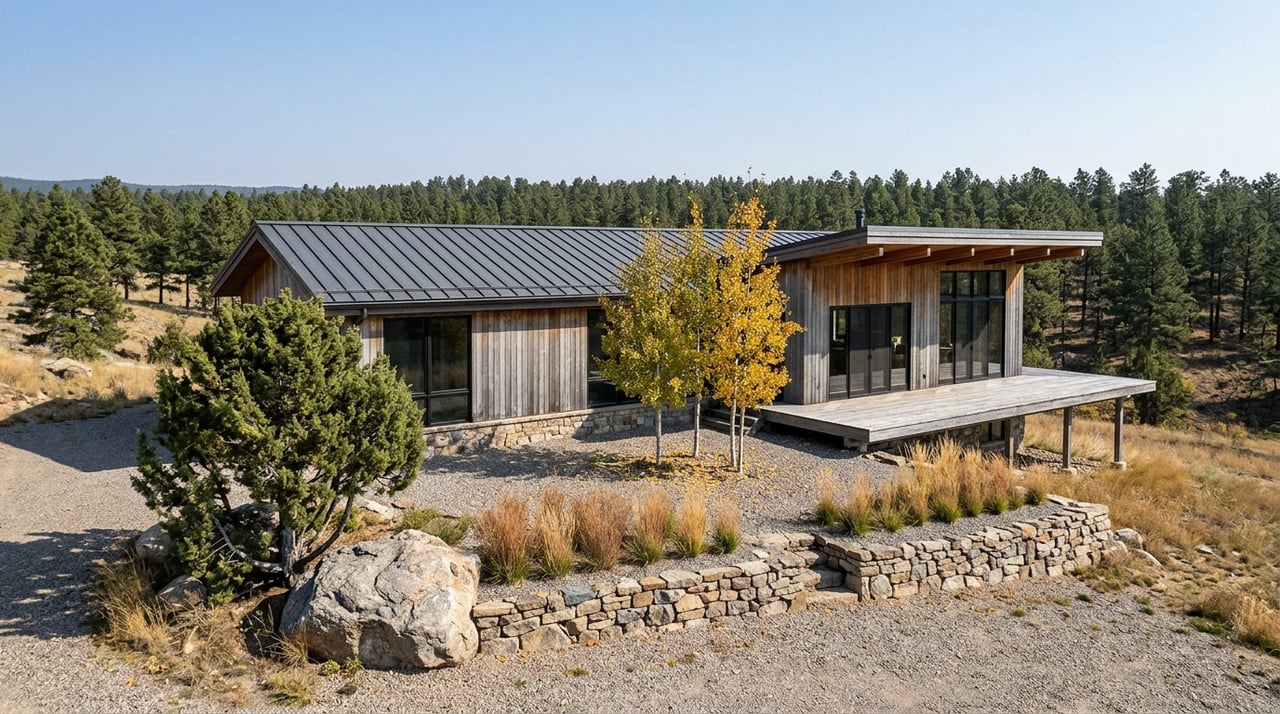
The Restrictions Eased on September 9. The Fire Danger Didn't.
If you live in Sugarloaf, Gold Hill, or anywhere along Fourmile Canyon, you probably saw the notice. Boulder County dropped its mountain fire restrictions from Stage 2 to Stage 1 on September 9, ending the stricter rules that had been in place since June 30. The instinct is to read that as good news, maybe even a green light to finally use the fire pit before the snow flies.
Look at what actually moved over that ten-week stretch and the story gets more complicated. Boulder logged just 1.56 inches of rain between June 30 and September 9, the third driest such window on record going back to 1950. Drought coverage across the county grew from 11 percent in Extreme Drought on June 30 to 84 percent by the time restrictions eased. The fuel moisture readings that actually predict how fast a fire spreads, called Energy Release Component and Burn Index, are sitting near the 90th percentile, higher than they were the day Stage 2 went into effect. The county eased the rule while the ground got drier, not the other way around.
The county's stated reasoning for the rollback cited "improved weather conditions, reduced fire danger, and increased availability of firefighting resources." That third clause is the one doing the real work. Colorado had multiple active wildfires competing for crews this summer, and as those wound down, engines and hand crews became available again elsewhere. That's a staffing story, not a rainfall story.
Stage 1 still prohibits campfires, charcoal grills and barbecues, and personal fireworks, along with other ignition-related activity. If your plan for the fall involves an outdoor fire pit or a charcoal grill on the deck, that plan hasn't changed just because the stage number did. The U.S. Forest Service, which manages the national forest land wrapping around Gold Hill and Sugarloaf, reached the same conclusion independently. Its own Stage 1 order for the Boulder and Clear Creek Ranger Districts took effect September 1 and runs through the end of December, a separate decision from the county's and one federal land managers aren't treating as temporary.
For a mountain parcel with more slope, more wind exposure, and more standing timber than the county average the Stage system is built around, the label on the website is a floor, not a forecast.
Nobody understands that gap better than the people who actually respond when something goes wrong up here. The Sugar Loaf Fire Protection District covers 17 square miles between Sugarloaf and Boulder Canyon, staffed entirely by volunteers, around three dozen of them, who together handle somewhere in the range of 120 to 140 calls a year: vehicle accidents, smoke reports, lost hikers, and the occasional structure fire. Their own posted guidance says the department is "patrolling on drier weekends" and will keep staffing up through an active fire season, restrictions notwithstanding. A crew that runs on volunteer hours doesn't add patrol shifts because a press release changed a number. They add them because the woods are still dry.
That's the piece worth carrying into how you plan the next few weeks. The county's stage level tells you what's legal. The district's patrol schedule tells you what's actually being watched.
None of this means the close-in mountains are on lockdown. The Gold Hill Inn, the century-old restaurant and music venue that's been part of this ridge for generations, has its fall lineup running on schedule. The barroom stage closes for a private party on September 26, then reopens the next night for the Greg Schochet Trio, a country and swing act with three decades of Colorado stage time, for a ten dollar cash cover. October brings Avasso, a folk and jazz group that's actually from Gold Hill, and then Willis Alan Ramsey, whose 1972 debut has been covered by artists from the Allman Brothers to Lyle Lovett, for an evening with advance tickets at thirty five dollars.
A few miles down the ridge, the Gold Hill General Store keeps doing what it's done for over 150 years. Owner Dwight DeBroux runs one of only two businesses in a town with no cell service, and the draw is exactly what you'd expect from a place like that: a potbelly stove, homemade pie, and a chocolate chip cookie DeBroux will tell you is the reason people keep coming back. That stove matters here for a reason beyond the ambiance. It's an enclosed heat source, not an open flame, which is why it can burn through a Stage 1 restriction while a backyard fire pit can't. Knowing that distinction, rather than assuming every wood fire is treated the same, is the kind of detail that actually matters if you're trying to stay both warm and compliant this fall.
The county didn't just relax restrictions in September. It also opened its Fall 2026 Strategic Fuels Mitigation Grant cycle, accepting applications from September 17 through October 29. This one is aimed at nonprofits, fire protection districts, HOAs, and municipalities rather than individual homeowners, but it's directly relevant to anyone whose property sits inside a shared boundary with neighbors, which describes most of Sugarloaf and Gold Hill. Since the program launched in 2023, it has awarded more than $7 million, leveraged over $10 million in matching funds, and supported more than 1,300 acres of completed fuels reduction across the county. If your HOA or a neighborhood group has been talking about doing shared mitigation work along a property line or a shared access road, this is the window to apply, not sometime next spring.
That single detail says more about how the county actually views fire risk this fall than the Stage 1 label does. You don't open a mitigation grant cycle the same week you decide the danger has passed. You open it because you know the work isn't finished.
The stage number is useful shorthand, but it was built for the whole county, plains and mountains together, and this fall it's telling a plains story more than a mountain one. The people who actually operate up here, the Sugar Loaf volunteers on patrol, the Forest Service keeping its own restrictions running through December, the county opening a grant cycle instead of declaring victory, are all behaving as if the risk hasn't changed much since June. That's the read worth trusting over a webpage that updated once.
None of that means staying inside. It means checking the actual restriction text before you light anything outdoors, keeping an eye on your own defensible space regardless of what stage the county is in, and knowing that the fire district covering your road is still watching closely even when the sign out front says otherwise.
If you're weighing a move into Sugarloaf, Gold Hill, or anywhere along the close-in ridge, and want a read on what a specific parcel's fire district coverage, access road, and mitigation history actually look like before you commit, John Canova has spent three decades in these neighborhoods and can walk you through what the paperwork doesn't tell you. Work With John.

Team up with John to ensure your next Boulder Real Estate Transaction is a Success.